
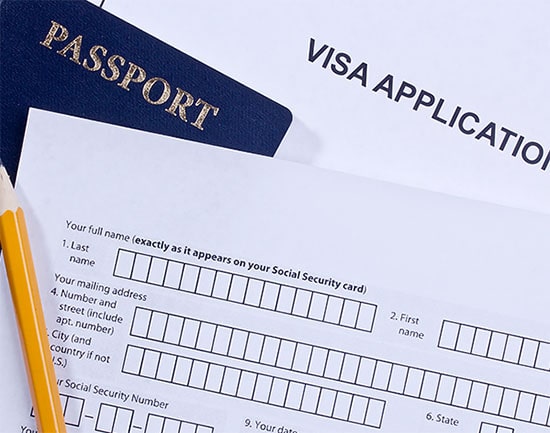
Immigration fraud occurs when someone knowingly provides false or misleading information or hides essential facts to obtain an immigration benefit from the U.S. government. While many believe all forms of dishonesty are treated alike, the law draws critical distinctions. Simply omitting information is not the same as forging documents, yet both are subject to strict scrutiny under immigration law. The Immigration and Nationality Act (INA), the foundation of U.S. immigration policy, places honesty at the system's core.
Under laws such as INA Section 212(a)(6)(C)(i), any act of intentional misrepresentation or fraud can result in severe and often permanent penalties. These measures exist to preserve the integrity of the immigration process. Fraud or willful misrepresentation is a serious violation that can profoundly affect your future in the United States. Read along to understand how these laws work and the lasting impact of dishonesty in immigration cases.
The Immediate Consequences
Rejection and a Prohibition on Future Uses
By filing an immigration application, you are swearing to the U.S. government that the information you present in the application is true and correct to the best of your knowledge. The revelation of a lie has both short-term and long-term repercussions. The denial of the benefit you are seeking, be it a visa, a green card, or any other immigration status, is the first and most predictable consequence.
But the damage does not often end there. An act of dishonesty leaves a significant mark on your immigration history, and any further application you may file becomes incredibly challenging. This first refusal is not just a loss; it is often the first step in a much greater and more serious series of legal troubles that may haunt you the rest of your life.
Understanding Willful Misrepresentation and Fraud
The U.S. immigration law draws a vital line between unintentional errors and intentional misrepresentation. You need to know two main legal terms: willful misrepresentation and fraud. A willful misrepresentation is when you knowingly and intentionally give false information about a material fact. A fact is deemed material when it is naturally inclined to affect the official determination of an immigration officer.
You must have known it was not true when you gave the information. An example would be when you say you have a university degree you never obtained to obtain a work visa, which would be a willful misrepresentation.
Fraud is a more serious violation involving knowingly making a false statement, intending to deceive a U.S. government official, who relies on that lie to approve an immigration benefit.
Although the government must meet a higher legal standard to prove fraud, both findings, fraud and willful misrepresentation, can lead to the same severe outcome: permanent inadmissibility to the United States under Section 212(a)(6)(C)(i) of the Immigration and Nationality Act. This distinction is critical because an honest mistake or the failure to disclose information not explicitly requested is generally not considered misrepresentation. The false statement or omission must be intentional.
The Probability of Your Present Application Being Rejected Outright
When you lie on your application, your case will also be denied. Officers of U.S. Citizenship and Immigration Services and the Department of State are not mere clerks but also trained investigators. They examine all the information you give them and compare information in several interrelated government and international databases, including the Treasury Enforcement Communications System (TECS) and the Student and Exchange Visitor Information System (SEVIS).
They seek discrepancies in your chronology, differences between what you say in an interview and what you write in an application, and documents that seem to have been changed or forged.
These officers also look at information available to the public, such as your social media accounts, to confirm your statements. Your application will be rejected if an officer notices a lie concerning a material fact.
What is critical is that although the truth would not have automatically disqualified you, lying shows you lack good moral character, destroys your credibility, and leads the officer to reject other parts of your application.
Permanent Inadmissibility
The worst short-term effect of lying on an immigration form is that you become permanently inadmissible to the United States. This is not a temporary prohibition: it is a lifetime bar to receiving a visa, obtaining a green card, or being lawfully admitted to the U.S.
This severe penalty is established under the Immigration and Nationality Act, as the entire immigration system relies on applicants providing truthful information. Once it is determined that you knowingly lied about a material fact, that finding becomes a permanent part of your immigration record.
It does not fade with time. This implies that although you may be able to obtain an immigration benefit later in some other way, such as getting married to a Californian many years later, this ground of inadmissibility will continue to be an obstacle that is nearly impossible to overcome. The lie you told, though it may have been about a long-ago refused petition, will still stand in your way of obtaining immigration benefits into the U.S.
Legal and Criminal Penalties for Violating the Immigration and Nationality Act
Although the rejection of your application and a lifetime bar are devastating, the consequences can go well beyond administrative immigration issues and into federal criminal law. Immigration fraud is not only considered by the U.S. government as a procedural violation but a grave federal offense that endangers national security and the integrity of the legal immigration system. Lying, filing forged documents, or lying under oath can transfer your case to a federal court where the punishment will be much harsher and may result in a long prison term.
Being Charged with Immigration Fraud
When federal officials determine you committed fraud in seeking an immigration benefit, willfully and knowingly, you may be criminally prosecuted. These crimes are prosecuted under several federal laws. To illustrate, 18 U.S.C. 1546 criminalizes any false statement made under oath on any immigration form or the creation, possession, or use of fraudulent documents, such as a visa or permit.
A conviction under section 1546 may result in up to 10 years’ imprisonment; in certain aggravated circumstances (such as fraud tied to a terrorism aim), higher penalties may apply. In addition, 8 U.S.C. 1325(c) criminalizes marriage fraud explicitly, with a maximum sentence of up to five years in prison and a fine of up to $250,000.
Another essential law, 18 U.S.C.1001, makes it a crime to knowingly give false or misleading information to a federal officer, even if you are not under oath. Investigations under this law are usually handled by specialized agencies such as Homeland Security Investigations (HSI). Being charged under this statute can have serious, life-changing consequences beyond your immigration case.
The Threat of Deportation and Removal Proceedings
If you are already within the United States, either on a temporary visa or as a lawful permanent resident, identifying a lie on a prior or current application may result in removal proceedings.
It starts with the government sending you a Notice to Appear (NTA), a paper that directs you to appear in immigration court to defend against the government’s effort to deport you. You will have a government lawyer whose only task is to demonstrate that you are deportable.
California residents need to understand that state laws like the California VALUES Act (SB 54), which limit local law enforcement's cooperation with federal immigration authorities, do not protect in cases of immigration fraud. Federal agencies like ICE and Homeland Security Investigations can and will investigate and arrest individuals for federal fraud violations independently of local police.
If the immigration judge determines that you obtained your admission or status by fraud or willful misrepresentation, they may order that you be deported. It can result in the heart-wrenching separation of families and the ruin of the life you have created in the United States.
Moreover, the deportation process has its own bars to re-entry, typically five, ten, or even twenty years, on top of the permanent bar of the original fraud.
Form I-212 and Waivers of Inadmissibility
If you are declared inadmissible on grounds of fraud or are deported, the road to legal re-entry into the United States is highly challenging. Although some waivers exist under extremely restricted conditions, they are not readily available.
You can request a 212(i) waiver for an immigrant visa. But the standard of proof of this waiver is very high. You must demonstrate that your admission denial would cause extreme hardship to a U.S. citizen or lawful permanent resident spouse or parent. Notably, suffering your children, however harsh, is not a qualifying factor for this waiver.
Extreme hardship is a legal phrase of art, and it entails more than the emotional or financial hardships accompanying family separation. It should be an unusual or remarkable hardship. In the case of nonimmigrant visas, an alternative waiver under INA 212(d)(3) could be offered.
It is at the discretion of the consular officer. It involves weighing good considerations on one side against the gravity of your past misrepresentation, which will always be heavy against you. If deported, you must properly file Form I-212, requesting permission to reapply for admission to the United States, an added, highly discretionary step in an already complex process.
Revocation of Status and Loss of Citizenship
One of the most harmful and widespread myths is that after receiving a green card or even becoming a U.S. citizen, you are not going to be punished by the effects of a past lie. This is basically false.
The U.S. government can examine your complete immigration history at any time. Fraud can be discovered, and the status you have so diligently earned can be revoked, years or decades later. Your sense of security is usually a mirage when it was constructed on a platform of deception.
Lawful Permanent Residents: Your Green Card is Not Safe
Should it be found out that you have acquired your lawful permanent resident status (your green card) by means of willful misrepresentation or fraud, this status can be revoked. This is called rescission of adjustment of status when the discovery is made within five years of acquiring your green card. At this time, the government may cancel your status in an administrative manner. However, you are not safe even after the five-year mark.
The government may put you in removal proceedings and present to an immigration judge the argument that your green card was not valid in the first place due to having been obtained by fraud.
This could lead to you losing your permanent status and being deported, no matter how many years you have lived in the country, how many children you have brought up, how much business you have developed, or how strong your attachment to your community. A decades-old lie can ruin a decades-long life.
The Consequences of Denaturalization for Naturalized Citizens
The worst and ultimate outcome is the loss of U.S. citizenship, a legal procedure known as denaturalization. Although it is not usual, the government may and does commence legal action in federal court to revoke the naturalized citizenship of a person whose citizenship was obtained illegally or by the intentional misrepresentation of a material fact.
This has two main reasons. The first is illegal procurement, that is, you were not really a naturalization candidate when it was granted, usually due to some underlying crime or some other immigration fraud.
The second is procurement through concealing a material fact or willful misrepresentation, meaning you lied in the naturalization process. As an example, the denaturalization may occur due to a failure to reveal a prior arrest that would have indicated a deficiency in Good Moral Character, which is a crucial citizenship requirement.
These are not administrative actions, but complete federal lawsuits from the Department of Justice. When you undergo denaturalization, you go back to your former immigration status, which in most cases would be a permanent resident once again, but a permanent resident now liable to removal proceedings due to the initial fraud.
Types of Lies that Can Lead to These Consequences
It is easy to think that only big lies cause big trouble, but a broad spectrum of lies can cause the dire outcomes outlined above. Any false statement that may influence eligibility is a serious violation of trust by immigration officials.
Marital status is one of the most prevalent. Entering into a fraudulent marriage to obtain a green card constitutes a serious federal offense. Investigators are trained to identify this and may use separate detailed interviews with the couple, called Stokes interviews, and unannounced visits to the couple's home. Material misrepresentation also includes lying about being single to obtain some visas.
The investigation can also scrutinize the marriage certificate, which is obtained under the provisions of the California Family Code. Proving that the marriage was entered into solely to evade immigration laws, and not with genuine intent as required by California state law, would form a key part of the federal government's fraud case.
Failure to reveal a complete criminal history is another common and harmful deception. This covers every arrest, charge, and conviction, both domestic and international, even those that were sealed or expunged. The rules of immigration law are different, and what might appear to be a minor offense in a criminal court can be a basis of inadmissibility. It is perceived as an effort to conceal a possible disqualifying factor.
This is particularly critical in California, where some state convictions have profound federal immigration implications. As an example, the non-disclosure of a conviction of stealing under California Penal Code 484, domestic violence under California Penal Code 273.5, or drug offenses under the California Health and Safety Code can be regarded as a concealment of a Crime Involving Moral Turpitude (CIMT) or aggravated felony, which results in the finding of a fraud and an additional reason to be deported.
Lying about your employment history or financial status is also very common. These involve forging experience letters to obtain an H-1B visa, forging bank statements to satisfy sponsorship criteria, or creating a job offer that does not really exist to obtain a green card. Such lies may be easily disproved by verification.
Also, an asylum application is one of the riskiest areas to lie in. If you make up a false story about persecution to obtain asylum, it is considered fraud and can also be labeled a “frivolous asylum claim.” This finding is severe because it creates a permanent and non-waivable barrier to receiving future immigration benefits.
Find a Reliable California Immigration Lawyer Near Me
Going through the U.S. immigration system can be complex and stressful. The pressure to present a perfect case can be too much to bear, but concealing or distorting information is a devastating mistake. The effects of lying on an immigration application are severe and include the immediate rejection of an application and a permanent ban on entering the United States. They can also result in deportation, permanent residency or citizenship loss, and federal prosecution. Due to the rigorous vetting procedures today, dishonesty is nearly always discovered, whether quickly or years later.
The most precious thing in any immigration case is credibility; once it is gone, it is almost impossible to regain it. You want to obtain expert legal advice and secure your future. To seek assistance regarding your immigration matter, contact the California Immigration Attorney at 424-789-8809 today.