
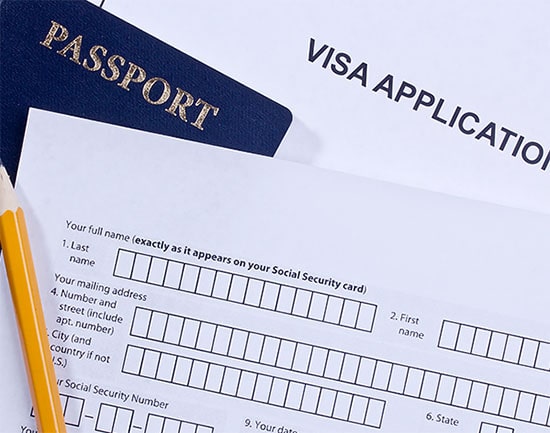
The dream of entering the United States for a vacation, business opportunity, or even a new life often encounters a formidable gatekeeper: the law of inadmissibility. The U.S. immigration system functions not merely as a doorway but as a highly sophisticated screening mechanism. According to the Immigration and Nationality Act (INA), the government has a strict checklist intended to safeguard national interests. The causes of denial may be subtle, including minor paperwork discrepancies, medical issues, or even red-flag criminal records and former immigration law violations.
When someone is denied entry at a port of entry, it is not just a logistical nightmare. It is a major life-altering obstacle. Understanding these barriers is the first step in navigating them. The information below addresses the issues that affect your inadmissibility.
Health-Related Grounds
An applicant’s health is treated as a matter of public health and national security when requesting permission to enter the United States. The state treats your health as a matter of national security, and a check-up is often the only thing standing between you and your visa.
If an applicant is diagnosed with a Class A medical condition, they are deemed medically inadmissible under U.S. immigration law. This category includes communicable diseases that have a public health significance, such as:
- Active tuberculosis
- Syphilis
- Gonorrhea
Although these conditions are often treatable and eventually resolve, a current infection during your exam will put your application on hold.
Note: HIV is no longer a ground of inadmissibility under current U.S. law.
In addition to infections, your mental well-being and past substance use are closely scrutinized. You will not be denied entry just because you have a mental health designation. However, chances are that when this designation is linked to harmful or dangerous conduct that risks the well-being of the self or others, then you will undoubtedly be denied. Perhaps most surprising is how your history with drugs can haunt you. For example, even without a criminal conviction, a civil surgeon can be denied entry should he/she find out that you have a history of drug abuse or addiction, including marijuana, which remains illegal under federal law.
Moreover, you should demonstrate the fact that you have been vaccinated against a long list of diseases, which includes polio and measles. In the absence of a complete medical history or a clear-cut waiver, your trip would end before it even started.
Criminal Grounds (Crimes Involving Moral Turpitude (CIMTs) and Controlled-Substance Offenses)
Your past can follow you to the border in ways you might not expect, especially when it comes to crimes involving moral turpitude (CIMTs). These are crimes that the government regards as intrinsically vile or depraved. They include:
- Fraud
- Theft
- Assault with a motive to inflict severe injury
Even a single conviction for shoplifting or a simple fraudulent offense can be sufficient to trigger a lifetime ban.
While a simple DUI usually will not keep you out on its own, it may get you into trouble when it is accompanied by other crimes or even when it indicates a tendency to be an alcohol abuser, which makes you a danger to society. If you have multiple convictions that lead to a compound sentence of five years or more, you are regarded as inadmissible, irrespective of when the offenses were committed and whether they involved moral turpitude.
The most unforgiving area of inadmissibility law is controlled substances. The U.S. has a strict zero-tolerance policy where one act of drug misconduct can result in a lifetime ban. More importantly, you do not even need a formal conviction on your record. Merely confessing to a consular officer or a border agent that you have used illegal drugs, even marijuana, which is federally illegal in spite of state law, will render you inadmissible. There are very few ways around this, the only one being a narrow statutory exception of committing one offense because of possessing less than 30 grams of marijuana. In most other CIMTs, this is probably relieved by the petty offense exception. If you have committed only one such crime in your life, the maximum term was no more than a year, and you have served less than six months, you can still be admitted without an elaborate waiver procedure.
Terrorism and National Security Grounds
The U.S. government still has some of its tightest restrictions regarding national security. You might discover that the terms "terrorism" and "support" are much more expanded than you thought.
If you have ever engaged in, organized, or even inspired terrorist action, you are permanently inadmissible under the Immigration and Nationality Act (INA). The law also targets material support, which may take the form of providing food, transport, or even small sums of money to a group designated by the U.S. as a terrorist organization. You could be found inadmissible even if the group compelled you to provide this assistance under duress or when the group's objectives aligned with American interests during the period. This scrutiny extends to your family, including your spouse and other family members, who may face heightened scrutiny or derivative consequences arising from your actions over the past five years.
A refusal can also be occasioned by your political affiliations, especially when you are or have been a member of a communist party or other totalitarian parties. While there are exceptions if your membership was involuntary, occurred when you were under sixteen, or was strictly necessary to obtain essentials like food or employment, the burden of proof rests entirely on you. Past membership may also be an issue, even though you can demonstrate that it ceased at least two or more years ago (or five years). This is assuming that one of the parties continues to exercise control over the government of your home country.
Moreover, the government has a wildcard in foreign policy. The Secretary of State can decide that your entry would have severe negative repercussions on U.S. foreign policy and bar you without any particular criminal or security offense. This vast power ensures that your presence in the country is always viewed through the lens of national security and diplomatic strategy.
Public Charge Grounds of Inadmissibility
When applying for a U.S. green card, you have to overcome the “public charge” ground of inadmissibility. This evaluation helps determine whether you have a high likelihood of becoming primarily dependent on government assistance for subsistence. Dependency is defined as reliance on state financial support to maintain income or on long-term institutionalization mandated by existing laws.
To test this, the officers apply the totality-of-the-circumstances test. This assessment considers your age, health, family situation, assets, and education. Prospective employees who are of working age (18 to 61), gainfully employed, and possess skills make a stronger case. The officers seek the preponderance of the evidence, which cannot be sustained by state aid.
The vast majority of applicants should also obtain a Form I-864, Affidavit of Support. This is a legally binding contract that a sponsor has to keep you at least 125% of the Federal Poverty Guidelines to maintain your income. This document is usually the most important for overcoming public charge issues.
Only safe and risky benefits should be differentiated. You risk ineligibility if you receive cash-based welfare, such as:
- Supplemental Security Income (SSI) or
- Temporary Assistance to Needy Families (TANF)
Non-cash programs, including SNAP, Medicaid, or housing vouchers, can be used most of the time without affecting your status, though.
Fraud and Misrepresentation
Lying to an American government official results in serious, lifelong consequences for immigration. Section 212(a)6(C) (i) of the Immigration and Nationality Act (INA) provides that a permanent bar under Section 212(a)(6)(C)(i) is triggered by the use of fraud or a willful misrepresentation of a material fact to obtain a visa or admission. A lie is material when it is predisposed by nature to affect the decision of an official; even trifles are enough to put an app on hold.
False claims to U.S. citizenship are the hardest penalties. In case you falsely indicate that you are a citizen to obtain any kind of benefit, even an I-9 form or voter registration, you create a non-waivable, permanent ground of inadmissibility. Contrary to general fraud, claims that arise after September 30, 1996, do not usually provide any waivers of extreme hardship, which may disqualify you from legal status in spite of any family relationship.
Similar risks pertain to marriage fraud, that is, getting into a fake marriage in order to avoid immigration regulations. In addition to the permanent inadmissibility, there is criminal prosecution, fines, and up to five years of imprisonment. Verification of relationships is conducted through aggressive vetting, including Stokes interviews and home visits. A marriage fraud under Section 204(c) finding bars the government, forever, from approving any future petition for a visa on your behalf.
In cases of general fraud or material misrepresentation (not citizenship claims), there is a narrow path to redemption through an I-601 waiver. You need to show that your inadmissibility would subject a qualifying U.S. citizen or permanent resident spouse or parent to extreme hardship. This requires written proof of medical, financial, or psychological distress, not merely the usual effects of separation.
Complete honesty is necessary. A single lie, when detected, has the potential to destroy your whole case. Given the existing legal environment, transparency and professional advice are essential so that past activities do not become too difficult to overcome in obtaining a residence permit.
Prior Removals and Unlawful Presence
You face a complex legal trap when you accumulate "unlawful presence" in the United States, as the most severe penalties are often triggered not by staying, but by the act of leaving.
Under the Immigration and Nationality Act, Section 212(a), clause 9(B), the government has two main time-based bars:
- The 3-year bar
- The 10-year bar
If you remain in the U.S. for more than 180 days without permission and then leave the country, you cannot return for 3 years. When you have been in an unlawful stay for more than 1 year, upon your departure, a 10-year bar will apply. More importantly, USCIS policy, the persuasive ruling in Matter of Duarte-Gonzalez, and current USCIS policy guidance state that these bars can, in fact, run or even expire within the U.S. as long as you have already triggered them through a prior departure and subsequent reentry.
The next category, which is more restrictive in time, is the permanent bar under Section 212(a)(9)(C). The bar is dissimilar, as it applies if you:
- Accrue more than one year of unlawful presence (in the aggregate) or
- Are ordered removed and subsequently enter or attempt to re-enter the U.S. without being admitted by an officer
Unlike the 3-year or 10-year bars, the permanent bar has no "extreme hardship" waiver available to those seeking a green card through family. Instead, the law will require you to spend a minimum of 10 years outside the United States, and then you will be allowed to request permission (Form I-212) to apply for a visa.
The second typical instance in which this penalty is applied is when individuals repeat their illegal entry into the country. However, they are unaware that their total months in the U.S. have already exceeded the one-year limit.
Although these bars are meant to be punitive, the I-601A Provisional Waiver provides a critical safety valve for individuals who face the 3-year or 10-year bars and are married to U.S. citizens or permanent residents. This waiver will permit you to seek forgiveness in the 2025 to 2026 processing environment regarding your presence in the United States illegally, even though you remained physically in the country. You can minimize the risk of being caught out of the country by obtaining permission before your consular visit in the host country. However, you will have to demonstrate that your absence will result in extreme hardship for your qualifying U.S. relative, a high evidentiary standard. You will need to document medical, financial, and psychological dependence extending much further than the normal sadness of family separation.
To work through previous removals and unlawful presence, it is necessary to calculate each day of your stay in the U.S. and every border crossing throughout your history. You safeguard your eligibility by identifying these triggers before taking any action that may result in a bar. Currently, with increased digital surveillance and biometric border controls, the government maintains detailed records of both entries and exits. This makes it almost impossible to hide a history of illegal presence. Your strategy for legal status must account for these invisible barriers, ensuring that a past mistake does not become a permanent barrier to your future in the United States.
Miscellaneous Statutory Grounds
Although you probably could focus on health or criminal records, the Immigration and Nationality Act (INA) includes a list of miscellaneous statutory grounds. These are a catch-all of activities considered contrary to the social, legal, and ethical values of the American people. The grounds can be provoked by particular actions, which are not always criminal ones in your home country, but which are absolutely forbidden according to the U.S. immigration policy.
- Practice of polygamy — You are inadmissible under Section 212(a)(10)(A) if you are an immigrant who has entered the United States to engage in polygamy. It is important to note that the law targets your intent to practice it explicitly. Your mere belief in polygamy is generally not enough for a denial. However, if an officer suspects that you will have more than one wife in the U.S., then you will be permanently barred.
- Guardians accompanying "helpless" individuals — You will face a special obstacle when you are traveling as a companion. Under Section 212(a)(10)(B), if you travel with an inadmissible and certified person who is declared by the government as helpless, mentally and physically disabled, or a baby, you also become inadmissible. This would ensure that an individual who is not in a position to take care of himself/herself is not left without his/her primary support.
- International child abduction — The U.S. is very firm in regard to international custody cases. In case you have detained, retained, or withheld any child outside of the U.S. by any person to whom a U.S. court has granted legal custody of a child, you shall not be admissible under Section 212(a)(10)(C). This bar can even be extended to you in case they find you to have aided the abductor or to have aided them in the form of material aid or a haven.
- Criminal voters and tax evaders — Your previous civic and monetary decisions are also questionable. In case you have voted contrary to any federal, state, or local law, you are inadmissible. Moreover, you can be denied under the Reed Amendment as a former U.S. citizen who renounced citizenship with the express purpose of not paying federal taxes. Although the government hardly ever uses the tax evasion ground, as it is hard to prove one's intentions, the law remains active on the books.
- Alien smuggling — The most destructive miscellaneous ground, perhaps, that you can face is alien smuggling (Section 212(a)(6)(E)). The definition is notoriously broad. It is applied in case you have encouraged, induced, assisted, aided, or helped any other person to get into the U.S. illegally. This is not only the case with professionals. You could be barred from giving money to a third party to bring your child over the border or from lending a car to a relative to enter the country illegally. There is a small exception for a waiver if you smuggled a spouse, parent, or child. Otherwise, the bar is permanent and hard to cross.
Find an Immigration Attorney Near Me
Understanding U.S. inadmissibility is crucial, and even slight oversights in health, criminal history, or public charge status may result in permanent bars. With immigration policy changes in 2026 and more thorough vetting and entry requirements, it will not be easy to overcome these legal challenges solely through documentation. You will need a tactical defense. An inadmissibility finding does not necessarily mean game over, but it does require the assistance of experts who would help you obtain waivers and guard your future.
If you have problems with entry, call the California Immigration Attorney today at 424-789-8809 and have your case carefully reviewed. Allow our committed team to guide you toward a lawful and successful outcome.