
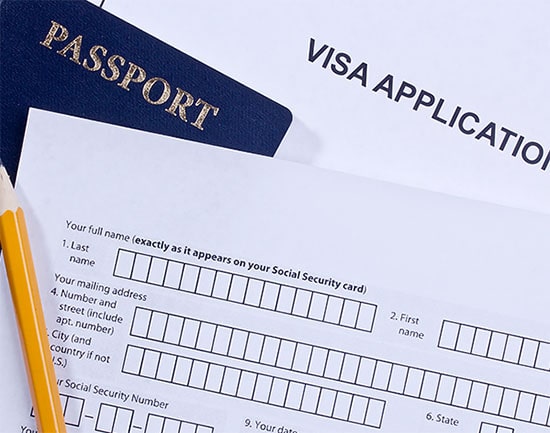
Humanitarian parole is a measure by USCIS (United States Citizenship and Immigration Services) that allows foreign nationals outside the U.S. and without a visa to temporarily enter the country for significant public benefits or urgent humanitarian purposes. It is generally granted in cases where compelling humanitarian reasons exist to enter the U.S. and other immigration choices are inappropriate or unavailable. However, this measure is not available for everyone. Only eligible foreign nationals may enter the country under humanitarian parole, as this blog explains.
Individuals Eligible Under the Humanitarian Parole Program
Humanitarian parole’s focus is to allow the entry of foreigners who are otherwise ineligible to obtain a United States immigrant visa but should nonetheless be allowed entry for compelling reasons. To qualify for this program, a person must prove that significant public benefits or urgent humanitarian reasons justify their entry into the country.
Examples of cases where the USCIS may grant humanitarian parole include the following:
-
Medical emergency: A person seeking emergency, life-saving medical intervention in the U.S. that is unavailable in their country, or a person who must care for their terminally ill relative.
-
Humanitarian assistance. A person entering the U.S. to provide essential humanitarian support or assistance in response to humanitarian crises, natural disasters, or emergencies.
-
Family reunification. Situations that entail reunification with immediate family members who are lawful permanent residents or United States citizens and who are facing severe humanitarian or medical issues. For example, a person who needs to settle the affairs of their deceased relative in the U.S.
-
National security or law enforcement considerations. Cases that involve persons who have valuable expertise or information relevant to national security or law enforcement interests of the U.S.
-
Individuals who have urgent crises, for example, those facing the risk of targeted harm
-
Individuals who are key witnesses for a trial that will take place in the U.S.
Note that every case is unique, and qualification for the humanitarian parole program will be based on the particular circumstances of your case.
Application Requirements for Medical Emergency
As stated earlier, a foreign national who is otherwise inadmissible to the United States qualifies for the humanitarian parole program for medical purposes, including:
-
Receiving medical attention for themselves
-
Taking care of a very ill relative
-
Visiting a family member who is terminally ill
-
Donating an organ to a person in the U.S.
If the applicant is a minor, they will require parental consent to apply for this program. The request for humanitarian parole must be meticulously documented. If you are seeking to receive medical treatment for yourself, you should accompany your application with the following information:
-
Evidence from a medical professional, for example, a written statement by your attending physician describing your prognosis and diagnosis, together with the type of treatment required and the anticipated duration of that treatment.
-
A statement on why the medical intervention you seek cannot take place in your country of origin or any nearby country
-
The approximate cost of the necessary medical intervention and the source of the funds needed to pay for it. Documentary proof of adequate funds should be included.
-
How the applicant intends to pay for their return ticket to their country
Likewise, if you are traveling to donate an organ, ensure you include a written statement from a medical professional and any agency assisting with planning and scheduling the travel.
If you are coming to the U.S. to care for or see someone who is dying or sick, include the evidence of that person's diagnosis from doctors. Also include reasons why you must travel urgently. For example, you may obtain a letter from a health social worker mentioning that you are required to provide care and comfort to the patient while they obtain treatment.
Requesting Humanitarian Parole in Deportation Proceedings
You usually cannot request humanitarian parole when you are already in the country without legal documentation. However, you may successfully request humanitarian parole when you are in deportation proceedings. In this case, you will have to fill in the necessary forms and accompany them with a comprehensive explanation regarding why you require humanitarian parole.
If you or your loved one has been detained by immigration and wishes to request humanitarian parole, they must submit their request and application to the ICE (Immigration and Customs Enforcement) local field office director. Immigration laws on humanitarian parole for individuals detained by immigration provide that specific groups will be accorded special considerations. These include the following:
-
People who should be released for the public interest
-
Juveniles
-
Women medically confirmed as pregnant
-
People with severe medical conditions
-
Witnesses in legislative, judicial, or administrative proceedings
Undocumented Aliens Should Avoid Filing First-Time Humanitarian Parole Applications
Do not request humanitarian parole if you presently reside in the U.S. and you are not a legal immigrant or have remained in the country after your authorization to stay expired. Humanitarian parole’s primary purpose is to permit foreign nationals outside the U.S. to come into the country to address an emergency.
So, if you are already in the U.S., you do not require a travel authorization or document to handle an emergency here. You don't need to apply for humanitarian parole, as it won't result in legal immigration status. The USCIS would likely deny your application, as it would assume you are trying to bypass established immigration procedures to acquire legal status. In addition, your application might lead the USCIS to be aware that you live in the country without authorization, and such an action could end up subjecting you to deportation proceedings.
Eligibility for Special Humanitarian Parole Programs
Occasionally, the United States government will implement humanitarian parole initiatives for individuals whose home countries are experiencing civil strife or a disaster. One such program is the Uniting for Ukraine (U4U). This initiative was a unique program for Ukrainians displaced during Russia's invasion of Ukraine. Like all other humanitarian parole programs, Uniting for Ukraine was available solely to individuals living outside the U.S.
CHNV is another example of a special humanitarian parole program. This program allowed eligible Haitians, Nicaraguans, Venezuelans, and Cubans, with supporters living in the United States, to temporarily live in the U.S. Another kind of special humanitarian parole program helped certain members of the military and their relatives already living in the U.S.
However, as of mid-2025, President Trump’s administration successfully terminated the CHNV humanitarian parole program. The U.S. Supreme Court permitted this termination, resulting in the revocation of legal immigration status and an order for these individuals to self-deport or face removal proceedings. The U4U program was suspended in early 2025. Whereas many people already living in the country were granted parole for two years, renewals and new applications were stopped.
What's Next After a Humanitarian Parole Request Is Granted?
If the USCIS grants your humanitarian parole request, you will need to do the following next:
-
Submit a non-immigrant visa application (Form DS-160) online.
-
Appear for an interview.
-
Have biometrics and fingerprints recorded at a United States consulate or embassy.
-
Wait for the relevant officials to conduct further security checks and, in certain cases, see an approved doctor for medical exams.
After completing these steps, the United States consulate or embassy can issue you a boarding pass. A boarding foil resembles a visa and will allow you to travel to the U.S. and submit your humanitarian parole application once you enter. At this point, the USCIS will require you to pay a parole fee of $1,000. This fee was added after the implementation of the One Big Beautiful Bill Act (OBBBA) of 2025. The payment instructions will be provided to you. Various exceptions apply to this fee payment obligation. They include the following:
-
If the applicant is traveling to donate an organ in the U.S.
-
If the applicant is seeking humanitarian parole for a life-threatening medical emergency
-
If the applicant is attending a funeral of a family member
To apply for humanitarian parole, you will have to fill in and submit various forms, including:
-
Application for Travel Document (Form I-131).
-
Affidavit of Support (Form I-134)
-
Documents explaining and detailing your need to enter the United States
-
A filing charge, currently at $630
The Application for Travel Document Form is utilized for various reasons related to entry and departure from the country. That said, many sections will not apply to people requesting humanitarian parole. Please review all the instructions regarding this form before filling it out.
The first part, Application Type, should not overwhelm. You will notice there is no checkbox for those specifically requesting humanitarian parole to enter the United States. If you are applying for a specific humanitarian parole program, for example, the now-terminated U4U, skip to question 6E if you are applying for yourself and state the program. If you want to receive humanitarian parole based on unique circumstances, please indicate this requirement by checking the box in Question 7. Specify the period you will have to live in the country.
You complete the affidavit of support form to prove you have enough financial resources to fund your time in the U.S.
It is also essential to include documentary evidence. Begin with a detailed cover letter explaining your reasons for the application. If you did not manage to secure a visa to travel to the U.S., ensure you state the reasons for not being able to obtain it and where and when you submitted your application for one. Additionally, attach a copy of the Department of State's letter of refusal of the visa.
You can also provide evidence to show you can fund your whole trip (even medical care) and your return ticket, or, if applicable, state that your sponsor will pay for everything. Other evidence you can include is family relationships and medical records.
The USCIS can take months or several weeks to respond to your application. If you need a response to your application in a shorter time than the USCIS generally takes, you can seek expedited processing. Here, you will have to write the word “EXPEDITE” in the upper right corner of your application (if you are submitting the application via mail) and provide detailed evidence regarding why the USCIS should expedite its decision about your case.
An experienced lawyer can help you write the cover letter, submit your evidence convincingly, and make follow-ups to seek a response.
Later, when you are in the U.S., you will need to apply for an EAD (work permit) by completing USCIS Form I-765. The basic fee for filing this form is $470 if you are filing online and $520 for paper filing. In addition, you will have to pay a $560 OBBBA fee for the initial work permit and a $280 renewal fee.
What If Your Application Is Denied?
You cannot appeal if the USCIS denies your humanitarian parole request. If changed circumstances or new facts develop that were not raised in your original application, you can supplement the application by advising in writing of the changed circumstances or new facts. Also, submit any documentary evidence on the changed circumstances or new facts.
Alternatively, the USCIS may require a new application if there is a change in circumstances, if you can include further evidence or information in your new request regarding the emergency included in the prior request, or if new relevant information emerges that would be helpful. Ensure you accompany your new application with new supporting documents.
For example, if the USCIS denies your previous request to visit a sick relative, but you have now learned your relative's condition has worsened, you can reapply for humanitarian parole, including these new details. There is no limit on the number of new applications you can submit, but you will likely have to pay a filing fee per application for every such request.
Humanitarian Parole Duration
Generally, humanitarian parole remains valid for a given period. The USCIS determines how long humanitarian parole lasts depending on the specific case facts. It may grant humanitarian parole for a brief period to address urgent needs or for a longer period when ongoing treatment or humanitarian assistance is required.
A humanitarian parole can remain valid for up to 12 months. However, if that is not enough time, per the unique facts surrounding your case, you can seek parole or an extension. You must file the request to extend your humanitarian parole, and you cannot do so less than ninety days before the original humanitarian parole expires.
Humanitarian Parole Is Last-Resort Relief
Even though the USCIS states that anyone can request humanitarian parole, this remedy is often granted solely to individuals with genuine cases or medical emergencies or to those who must enter the country for reasons of public interest. A humanitarian parole program is not an alternative option to pursue if your visa application has been denied or if you want to avoid requesting a waiver. The USCIS is more likely to deny a humanitarian parole application on the basis that the applicant merely wants to use it to evade other visa requirements.
If, for example, other avenues for entering the country are available (like a B-2 visitor visa), the USCIS will generally deny your humanitarian parole application, except if you can prove that you should be granted parole for a unique humanitarian emergency.
Conversely, if you qualify for a visitor visa but you need to enter the U.S. to care for or visit a sick relative, and the local United States consulate back in your country of origin is taking longer to process your visa than the humanitarian parole application process, you may opt to request humanitarian parole instead. In this case, you must tell USCIS you want to visit only your relative. Some other potential reasons you may be disqualified from entering the country on a visa include the following:
-
You will be required to remain in the country longer than visitors can on the B-2 visa.
-
You are deemed unqualified for a visitor visa (B-2) since you overstayed your visa on your previous visit or for other valid reasons.
It is essential to remember that humanitarian parole is a discretionary measure. It is not a guarantee that you will enter the country. Individuals granted humanitarian parole do not qualify for citizenship or permanent residency solely based on their parole status. Also, individuals granted humanitarian parole must leave the country by the date their status expires, or they risk deportation proceedings.
Find an Experienced Immigration Law Attorney Near Me
If you believe you or your loved one may be eligible for the humanitarian parole program, it is essential to consult a knowledgeable immigration law attorney first before starting the application process. A skilled lawyer can review your qualifications, help you navigate the application process, and increase your chances of approval. At California Immigration Attorney, we boast lawyers with extensive experience helping clients with their humanitarian parole applications and advocating for their emergency humanitarian needs. Call us today at 424-789-8809 for a free consultation to determine your legal options.