
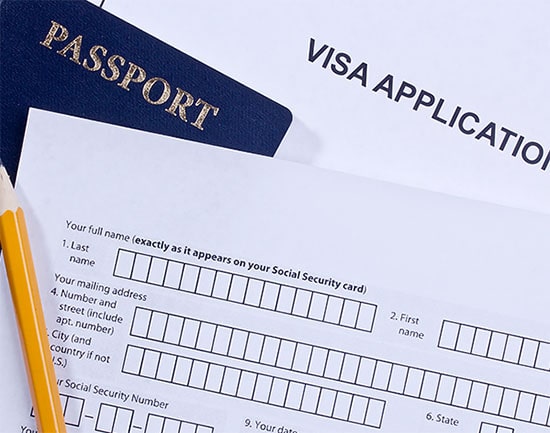
Your first stop will have to be a U.S. consulate if you wish to visit the United States for medical treatment, pleasure, or business. There, you will need to apply for a visitor or ‘’B’’ visa, allowing you one U.S. entry or several entries. However, you can skip this step and go through a faster online registration process before entering the United States. This can only happen if you are eligible for the Visa Waiver Program (VWP). Also known as ESTA, VWP is a useful option for foreign nationals who are changing planes in the United States. It is also the best option for people who would otherwise need to secure an actual entry visa from a U.S. consulate.
Understanding The Visa Waiver Program (VWP)
The Visa Waiver Program is a U.S. government program that allows citizens of certain countries to visit the United States for business, tourism, or transit. The U.S. government allows a stay of up to 90 days without a traditional visitor visa. This program is offered by the United States Department of Homeland Security, abbreviated as DHS, alongside the U.S Department of State.
VWP is a federal immigration program which applies to the entire United States. However, it is relevant to California because it is the most popular state for international visitors. California receives millions of visitors through airports, like San Diego, San Francisco, and Los Angeles. The Visa Waiver Program was created for the following purposes:
- Facilitate tourism and international travel
- Strengthen cultural and economic ties between participating countries and the United States
- Minimize administrative burdens related to visa applications
- Enhance security through information-sharing and traveler screening systems
How The Visa Waiver Program Works
Qualified travelers can do the following instead of applying for a visitor visa at a U.S. embassy or consulate:
- Hold a valid passport from a designated nation
- Stay for a maximum of 90 days
- Travel to the United States for approved purposes
- Secure approval through the Electronic System for Travel Authorization (ESTA)
ESTA Explained
The Electronic System for Travel Authorization (ESTA) is an online screening system that determines whether a visitor qualifies to enter the United States under the VWP. You must complete an ESTA application before boarding a ship or plane bound for the United States. Your ESTA must be approved, but it does not guarantee you admission. The U.S. Customs and Border Protection officers at the port of entry are the only people mandated to make final admission decisions.
You should apply for your ESTA as soon as you begin planning your trip if you are traveling to the United States under the VWP. The ESTA application must be submitted at least 72 hours before departure.
Requirements For Admission To The United States Under The Visa Waiver Program
You must meet several requirements before you can be admitted to the United States. Some of the requirements include:
Be Admissible To The United States
Admission to the U.S. is not guaranteed even with an approved ESTA. Once you arrive in the U.S., officers of the U.S. Customs and Border Protection agency will check if you are admissible under the U.S. immigration laws. You can be prevented from entering the United States if you fail to meet admission requirements.
Meet Security And Eligibility Requirements
Certain people do not qualify to enter the United States under the VWP. They can only enter the U.S. through a visa application. This includes some visitors who have dual nationality with certain designated nations. You will also not qualify if you have traveled to countries like Syria, Yemen, Somalia, Iran, Cuba, and Iraq during specified periods.
Arrive Through An Approved Carrier
If you are using the VWP, you must enter the U.S. through an approved commercial air or sea carrier participating in the program. You will require a visa if you are traveling on a private aircraft or on certain non-approved carriers. This is mandatory even if you qualify for the VWP.
Have Evidence Of Departure
You are required to secure a return ticket to your home country or an onward ticket to another destination outside the United States. This shows the willingness to depart before the allowed days expire.
Limit Stay To 90 Days or Less
Admission under the VWP is restricted to 90 days maximum per visit. You cannot extend your stay beyond 90 days or change to another immigration status while in the United States. If you wish to stay for longer in the United States, you must secure a visa before traveling.
Avoid Prohibited Activities
The VWP does not allow stays exceeding 90 days, permanent residence or immigration, or working as a journalist or foreign media representative. It also does not allow long-term study for academic credit or employment in the United States. You must secure the right visa if you intend to engage in these activities.
Travel For An Authorized Purpose
The activities you are allowed to engage in under the VWP are business and tourism. Business activities include participating in short-term training programs and negotiating contracts. Others include consulting with business associates and attending conferences and meetings. Tourism activities that are allowed include short recreational courses not leading to academic credit and participation in amateur sporting or cultural events. Other tourism activities include medical treatment, visiting family and friends, and vacations and sightseeing. You can also transit through the United States under the VWP.
Possess A Valid E-Passport
You must have an electronic passport containing an embedded electronic chip. Your passport must remain valid for at least six months beyond the designated departure date from the United States. This is mandatory unless your country has an agreement exempting you from the six-month rule.
Secure An Approved ESTA
You must receive approval through the Electronic System for Travel Authorization (ESTA) before boarding a ship or plane bound for the United States. ESTA is a pre-travel authorization, but not a visa. The U.S. authorities often use it to determine eligibility for visitors under the VWP. You must pay a fee and complete your ESTA application online. Approval is valid for up to two years or until the passport expires. The application must be submitted at least several days before departure, as processing can take 72 hours.
Be A Citizen Of A Visa Waiver Program Country
Only nationals or citizens of countries participating in the VWP qualify. Some of the participating countries include France, Sweden, Singapore, Japan, Australia, Qatar, and Italy, among others. Individuals from non-participating countries must secure a visa before visiting the United States.
Extending Your Stay In The United States While Under The VWP
You are admitted for a maximum of 90 days if you entered the United States under the Visa Waiver Program using an ESTA authorization. Extending your stay beyond this period is not allowed. You are required to leave the United States on or before the expiration date shown on your admission record (Form I-94).
The 90-day restriction covers all VWP visitors. You cannot file for an extension of stay or change to another non-immigration status while in the United States. Taking a short trip to the nearby country does not reset the 90-day limit; you are often readmitted only for the remainder of the original 90-day period. Extending your stay can lead to loss of future VWP eligibility and other immigration repercussions.
Whether You Can Apply For A Green Card While In The United States On The Visa Waiver Program
Sometimes, it is possible to apply for a green card while in the United States under the VWP, but it depends on the individual’s immigration category and circumstances. Circumstances that can allow include:
- The parent of a U.S. citizen who is at least 21 years old
- The unmarried child under 21 of a U.S. citizen
- The spouse of a U.S. citizen
In the above situations, some VWP entrants have been allowed to file for adjustment of status (Form I-485) without leaving the United States. According to USCIS, you must be lawfully inspected and admitted to the U.S.
Whether Children Require Their Own ESTA
A child must have their own approved ESTA if he/she is traveling to the United States under the VWP. Regardless of age, even babies and infants require a separate ESTA authorization. A child cannot travel using a parent’s ESTA approval.
A child will require a visa instead of an ESTA if he/she is not a citizen of a Visa Waiver Program country. You can complete the ESTA application on behalf of your child.
Whether An Individual Can Work Remotely For A Foreign Employer While Visiting The U.S. Under VWP
It is possible to work remotely for your foreign employer under VWP, but it is also legally risky and not clearly authorized under VWP. VWP does not authorize employment in the United States.
It is hard to work remotely for a foreign employer while physically in the U.S. Immigration authorities have not issued a simple, broad digital nomad rule for ESTA visitors. Performing your normal job from within the United States for a foreign employer paid into a foreign bank account is considered an unauthorized job. Jobs that are considered lower risk include:
- Handling urgent issues for your overseas employer while primarily visiting for tourism or a permitted business purpose
- Taking a few work calls, and
- Checking occasional emails
Jobs that are considered higher-risk include:
- Entering the United States with the intention of continuing your normal overseas job remotely
- Taking the United States as a temporary remote-work base
- Working full-time from the United States for weeks or months
Security Features Of The U.S. Visa Waiver Program
The Visa Waiver Program uses multiple layers of security to identify and prevent criminals, terrorists, immigration violators, and other high-risk visitors from entering the United States. These security features include:
Multi-Layered Security Approach
The VWP does not rely on a single security mechanism. It uses several overlapping levels of protection that include:
- Continuous monitoring of participating countries
- Biometric checks at entry
- Airline passenger data analysis
- International information sharing
- Intelligence screening
- ESTA authorization, and
- Secure biometric passports
The above layered security mechanism ensures that if one technique fails, other safeguards stay in place.
Continuous Monitoring And Risk Assessment
Regular evaluation of all VWP countries is often done by the Department of Homeland Security. Reviews examine immigration enforcement, counterterrorism efforts, law enforcement cooperation, border controls, and passport security. The department can suspend or remove from the program countries that fail to maintain the required standards.
Biometric Information Sharing
Biometric information sharing with VWP countries has been expanded in the United States. This has been done through programs, like the Enhanced Border Security Partnership. As a result, participating countries and U.S. authorities are able to compare fingerprints and other biometric data for visitors, immigration applications, and people encountered during law enforcement investigations. This system improves the ability to identify criminals and persons of security concern.
Counterterrorism Cooperation
Nations participating in the VWP are required to maintain strong counterterrorism partnerships with the United States. The partnerships include enhancing border security measures, supporting investigations, reporting foreign terrorist fighters, and sharing intelligence information. This cooperation helps scrutinize possible threats before they reach U.S. borders.
INTERPOL Lost And Stolen Passport Screening
VWP nations must report lost and stolen passports and use INTERPOL databases. This helps authorities in California to stop criminals from using stolen passports for international travel, prevent identity theft, and detect fraudulent travel documents.
Information Sharing Between Countries
VWP participating countries are expected to share crucial security information with the United States. Some of the information includes security threats, lost or stolen passports, serious criminals, and known or suspected terrorists. International cooperation strengthens both the partner country and U.S. security.
Advance Passenger Information And Passenger Name Records
Shipping and airline companies are expected to provide passenger information to U.S authorities before visitors arrive. Some of the information includes name, date of birth, reservation details, flight information, and passport details. Authorities will scrutinize this data to establish high-risk visitors before they reach U.S. territory.
Biometric Screening At U.S. Ports Of Entry
Visitors must undergo extra screening upon arrival in the United States. The U.S. Customs and Border Protection officials will collect fingerprints, capture facial biometrics, verify travel documents, conduct interviews, and perform database checks. This provides another layer of identity verification before admission is accepted.
Machine-Readable Passport Technology
A VWP passport must have a machine-readable zone, which permits immigration authorities to quickly verify identity information. This technology reduces document fraud, enhances accuracy during inspections, enables rapid electronic verification of visitor data, and improves border security.
Biometric E-Passports
All VWP visitors must have electronic passports. The passports contain biometric identifiers, a digital photograph, biographic information, and an embedded electronic chip. This chip has security measures that minimize illegal reading or skimming of personal data. Biometric passports make identity fraud hard.
Comprehensive Pre-Travel Vetting
The Department of Homeland Security often does extensive background checks on VWP visitors before they leave for the United States. Your information will be compared against terrorist watchlists, INTERPOL records, international security databases, immigration violation records, and criminal databases. This screening helps identify people who pose a threat before they start their journey.
Electronic System For Travel Authorization (ESTA)
ESTA is one of the most vital security features of the VWP. Eligible travelers must secure ESTA approval before traveling. It screens applicants before they board a ship or plane destined for the United States. The information you provide is checked against intelligence, multiple U.S. law enforcement, and counterterrorism databases. Applications that raise security issues undergo extra review.
Marrying A U.S. Citizen While Visiting On The VWP
You will qualify to apply for Adjustment of Status (AOS) if you visit the U.S. under the VWP and later marry a U.S. citizen. This can help you become a permanent resident without leaving the United States. USCIS recognizes an exception which permits immediate relatives of U.S. citizens, including spouses, to adjust status even if VWP entrants are not allowed to do so. However, the following factors will apply:
Approval Is Not Guaranteed
USCIS will review admissibility, eligibility, the validity of the marriage, and other factors before determining the case.
You Must File The Proper Immigration Applications
The foreign spouse must file Form I-485 to adjust status, and the U.S. citizen spouse files Form I-130. Immediate relatives can also file these concurrently.
Intent At Entry Matters
If a visitor enters the U.S. with a pre-existing plan to marry and stay permanently, this can raise concerns regarding misrepresentation or visa fraud. The case will be different if the decision to marry and stay arose after entry.
The Marriage Must Be Genuine
Immigration officials will determine whether the marriage is valid or was entered into solely for immigration benefits.
You Must Have Been Legally Admitted Under The VWP
USCIS requires that you undergo inspection and be admitted when entering the United States.
Find An Immigration Attorney Near Me
The U.S. visa waiver program allows citizens of 43 countries to travel to the U.S. for pleasure or business without obtaining a conventional visa. Instead of a visa, a traveler obtains a pre-travel authorization online. Stays should not exceed 90 days and cannot be extended. You must also have a valid passport to participate in the program. For further guidance on the visa waiver program, contact the California Immigration Attorney. Call us at 424-789-8809 to speak to one of our attorneys.