
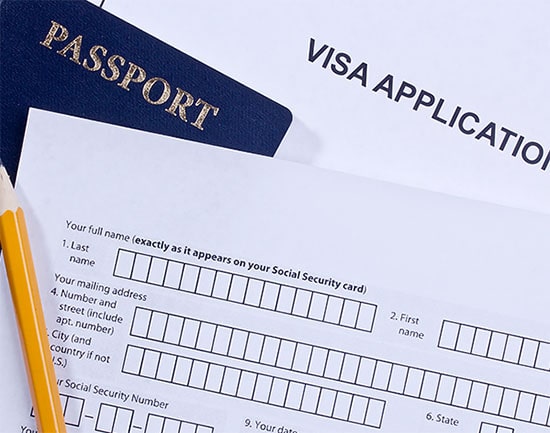
USCIS (United States Citizenship and Immigration Services) is the agency that processes requests for various immigration benefits. Although this agency works tirelessly to review applications promptly, delays have always existed. In recent times, however, the situation has worsened. Cases that usually moved swiftly through the system are now being delayed for months or years.
When your immigration case is taking longer than expected, you may feel frustrated, anxious, and even worried, and understandably so. But should you really be worried that much? And how long should it be before you start to worry, or what can you do to put your mind at ease? This blog helps answer these questions.
How Bad Immigration Case Delays Are
The issue of delays in processing immigration applications has become worse in recent years. Generally, the period you will have to wait for the USCIS to decide on your green card or visa application is based partly on what you are pursuing and your country of residence. Consider these examples:
If you are a United States citizen seeking a spousal green card or a green card for a minor, parent, or unmarried child, you face a waiting period ranging from 17 months to 5 years for the USCIS to approve your I-130 petition. This petition only initiates the immigration process; you will need to take further steps.
The USCIS’s approval of Form I-130 is only the beginning, giving you the green light to move forward with your green card request. This means you will face more waiting periods afterward. And if your foreign spouse resides abroad, it will be difficult for them to obtain even just a B-2 visa to come to the U.S. within this long waiting period. In any case, USCIS authorities would be strongly suspicious of them secretly wishing to remain in the U.S. permanently, contingent on their undetermined green card request. This intention would then render them ineligible to receive a B-2 or any other nonimmigrant visa.
If you are a green card holder wishing to apply for naturalization, you face a waiting period ranging from 7 to 11 and a half months after submitting your N-400 form before you are called in for an interview by USCIS. After that, you may wait several months for the USCIS to decide (if the USCIS requested additional documents or questions arose during the interview) or for the swearing-in ceremony.
If you are seeking asylum, you also face long waiting periods. Firstly, because the DHS (Department of Homeland Security) paused processing for asylum seekers in late 2025 to have time to strengthen its vetting procedures. The pause was lifted on March 30, 2026, for all countries except 39 of them deemed high-risk. For the time being, delays are expected.
When an asylum application is denied, the applicant is taken to an immigration court to face deportation proceedings unless they have a separate legal status to be in the United States. In immigration courts, the backlog is high.
Millions of defensive asylum requests are pending. Therefore, many asylum seekers subject to immigration court proceedings have to wait for years for a verdict. The toll on individuals who have run to the U.S. for their safety is high. They are subject to difficult financial situations, separation from loved ones, and the non-stop stress and anxiety of wondering if they will be deported at any time to the nation where they faced persecution.
There are so many examples of cases facing serious delays in the immigration system. It is safe to say that there is almost no immigration processing that moves on smoothly or swiftly.
Why There Are Delays
Before you start worrying why your immigration case has been seriously delayed, you want to understand why that may be so. There are various reasons why a process may be delayed. These include the following:
Filing Volume That Has Surpassed Capacity
Within the last several years, the USCIS has seen a dramatic increase in applications, including:
- Marriage-based adjustment documents
- Employment authorization paperwork
- VAWA and asylum filings
- Employment-related petitions
- Naturalization applications
- Humanitarian parole programs
Increased demand is not a problem in itself. The issue is that USCIS has yet to expand its infrastructure or improve processing speed. Rather than updated technology, streamlined workflows, or more adjudicators, USCIS struggles to adapt to the increase. High demand with no equivalent capacity leads to predictable delays.
Backlog of Cases
USCIS has recognized that there are record-breaking backlogs. However, statistics alone do not capture the real-life repercussions of these delays. For many people, delays mean the following:
- Expired work authorizations and lost jobs
- Postponed family unity and weddings
- Financial instability
- Inability to renew a driver's license
- Emotional exhaustion, uncertainty, and fear
When a case moves slowly through the system, it is not only a paperwork problem; it can alter the course of the applicant's life.
Shifts in Policies Create More Reviews
Federal policy shapes immigration decisions. Changes in internal or administrative guidance often lead to increased scrutiny, altered security protocols, a shift in adjudication standards, and changing evidentiary expectations. The shifts influence how officers assess cases and might decelerate processing for all application categories, even when an applicant has done everything properly.
RFEs (Requests for Evidence) Prolong the Process
NOIDs (Notices of Intent to Deny), requests for evidence, and any other request the USCIS officials make halt case review. The applicant is required to produce additional documentation, file their response within the required timelines, and wait for the official to review the file again, which can be months later. Some RFEs reveal genuine gaps in the evidence. However, others arise from inconsistent formatting, unclear documentation, incorrectly filled forms, and ambiguous statements. Submitting a compelling, detailed initial application is among the most efficient ways not to face unnecessary delays.
Background and Security Checks Can Delay Cases Indefinitely
National security vetting is a lawful part of the immigration process, though the system is far from efficient. Various agencies must coordinate to complete security checks. Delays may arise in the following scenarios:
- An applicant bears a common name
- The applicant’s fingerprints must be reprocessed
- Prior immigration records must be retrieved
- Interagency data does not match cleanly
- Travel patterns prompt additional review
Whereas security checks are essential, unexplained and lengthy stalls leave applicants stuck, unable to travel, work, or make plans for their future.
Persistent Staff Shortage
Even as the USCIS adds new staff, it faces a basic challenge: adjudicating immigration applications requires special skills. Officers undergo several months of training before they can review petitions. That means that solving the staffing issue does not resolve the backlog problem right away. Meanwhile, applicants continue to wait, often without meaningful updates.
USCIS Is Still Highly Reliant on Paper Systems
Despite the latest efforts to modernize, USCIS still processes many petitions utilizing paper files. The files must be physically shipped, assembled, routed, scanned, manually handled, and re-routed. Paper files in themselves are vulnerable to administrative bottlenecks, misplacement, and slow movement. A system that relies on paper-based processing cannot meet the increasing demand for immigration swiftly.
Looking at the above factors, you are highly likely not to blame should your case become delayed, as long as you have submitted your application properly with the right paperwork. To add to the factors, the United States immigration bureaucracy is vast, underfunded, spread worldwide, and serves millions of individuals yearly.
Furthermore, when administrations change, regulations and policies may change as well. When this happens, officers must change their operations and undergo retraining. Also, immigration processing delays have become entirely inevitable because the second Trump administration has fired many immigration judges.
What You Can Do If Your Case Faced Unreasonable Delay
Any immigration journey undoubtedly requires patience. What it does not require are indefinite waiting periods. Federal law prohibits agencies from setting cases aside indefinitely without justification. When your petition is stalled far beyond the posted average processing times, various practical steps can be helpful:
Review the Processing Timelines Posted by the USCIS
Start by checking the formal processing times tool on the agency’s website. On this website, you can see processing periods for various cases, which are updated every month. Compare all the dates that appear under “Now Processing” to the date you filed your request. This will help you establish what USCIS deems normal processing times, whether your petition falls outside the posted time ranges, and when you qualify to submit an inquiry.
Making this step helps base your expectations on publicly accessible data. If you have waited on a USCIS verdict regarding your case for a substantially longer period than the available estimate, further inquiry might be wise.
Contact USCIS
Your next step is to reach out to USCIS via their website or by phone. When engaging USCIS officials, remain firm but polite. Confirm that the agency has all the necessary information. For example, verify that you completed biometrics appointments, submitted an updated address, provided all supporting documents, and fully answered NOIDs or RFEs.
Inform the official of the specific date you filed your petition and ask whether any documents were missing from the application or if other problems with your petition have caused the delay. Remember that any missing piece can lead to delays that the USCIS may not notify you of immediately. When contacting the USCIS, ensure you have the following information ready:
- Your official name
- Case receipt number
- Any more identifying details
Submit a Case Inquiry
Utilize available tools, including the following:
- Congressional assistance,
- USCIS ombudsman petitions,
- “Case outside normal processing times” inquiries, and
- Online service request
If USCIS officials cannot give you a good reason for the delay of your application or an approximate date of completion, you could seek to submit a case inquiry using the tools above. For example, if you submit an “outside normal processing time inquiry,” you are informing the immigration office that you wish for your application to be re-examined or for further action on exceeding timelines. Once you submit your request, the USCIS will send you a reference number. You will be using this number to ask questions about your application in the future.
Submitting a case inquiry does not warrant that the USCIS will process your case faster. However, your submission flags your petition, and it may receive expedited handling. Or, issues causing delays may be uncovered.
Respond to USCIS Requests Promptly
While you wait for USCIS to act, ensure you respond promptly to any of their RFEs or notices of deficiency. When you submit a complete response soon after receiving a request, you are likely to minimize the resulting delays.
Additionally, you can intercept any possible delays before they happen by submitting any information regarding the changes that have occurred in your life to the USCIS. These include changes to your phone number, address, familial situation, and employment situation.
Seek Out a Professional to Review the Case
If, after several attempts to obtain information on your application, you see no progress, you can consult an immigration law lawyer to check the case. A lawyer can examine your petition thoroughly and interpret the case history, identify hidden issues and obstacles to approval, establish whether the delay is excessive or typical, and develop strategic options to help you.
For example, they can submit a request to the USCIS for you and escalate the process via any necessary lawful channels if they detect a denial of due process or procedural delays. Guidance from an expert legal representative can prevent unnecessary setbacks and costly mistakes.
Consider a Writ of Mandamus Lawsuit
A writ of mandamus is a federal suit filed in the United States District Court requesting that a judge compel the federal government to act on a stalled or delayed immigration application. Importantly, this suit does not request a judge to grant the immigration application. It only requests that a judge compel USCIS or the Department of State to decide on the application. You can file a writ of mandamus lawsuit if:
- The delay has become unreasonable.
- Your case remains pending far beyond the normal processing timeline
- The government does not act.
- Inquiries have not produced any meaningful updates
- The delay is hurting your job, family stability, safety, or life
In many instances, the writ of mandamus lawsuit works. It often leads to the scheduling of interviews, issuance of decisions, or cases starting to move after several years of stalling. However, note that this lawsuit is more contested now than in the past years. The federal government increasingly counters these suits, meaning you must be well-prepared for actual litigation, not just filing paperwork.
Note that a writ of mandamus lawsuit is not appropriate for each delay. Before you file, evaluate the following:
- The present USCIS processing periods
- Status of security review
- Case complexity
- Agency conduct
- Length of delay
- Possible litigation risk
This necessitates careful legal analysis. Rushing to file a writ of mandamus with no strategy can lead to unnecessary complications. Your lawyer can help you assess whether filing a writ of mandamus is appropriate and even represent you to improve your chances of success.
Remain Polite and Calm
When seeking information from the USCIS officials, be respectful. Avoid acting threateningly or in a demanding manner, since this may negatively affect how your application is handled. Note that officers and agents are processing many cases, and their objective is to complete applications objectively, in accordance with established eligibility criteria.
Polite but persistent inquiries show your valid interest while keeping a better working rapport. Generally, remaining organized, meeting qualification requirements, responding promptly to requests or questions, and adhering to the correct status-check process, while being patient and solution-oriented, often produce the best results.
It is crucial to recall that, whereas quick processing is what everyone wants, some cases and petitions may necessitate more clarification, attention, or review periods without either party feeling to blame. Unless processing goes beyond published approximated times by a significant margin, you want to give the USCIS the benefit of the doubt.
The idea is not to panic if you feel you are facing unreasonable delays in your immigration case. It is unlikely that immigration authorities are personally singling you out for worse treatment than others or that your case is lost entirely. However, you want to keep monitoring the case and ensure the delay you are facing is normal, and then follow up if it is not.
Find a Reliable Immigration Lawyer Near Me
Working with a skilled immigration lawyer from the outset of your application process is the ideal way of ensuring your petition is processed as swiftly as possible. The attorney can help prepare your application before filing to ensure you have submitted everything correctly and that no unwanted complications arise because of an incorrect or incomplete application.
With effective communication and diligent efforts, most cases that take too long still have a chance of a successful outcome. The last thing you want to worry about when navigating an immigration case is having the right to remain in the U.S. expire while awaiting a decision on your application.
At California Immigration Attorney, we can assist you throughout all the steps of your immigration case, wherever you are in California. Regardless of the immigration status you seek, we boast the necessary knowledge and experience to help you achieve a positive result for your petition. Call us at 424-789-8809 to schedule your complimentary consultation with one of our expert attorneys.