
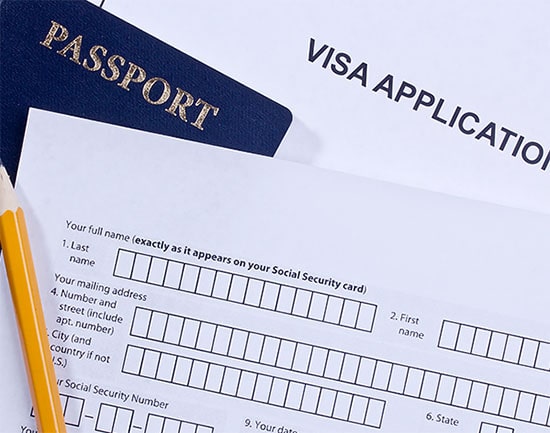
A travel ban is a presidential order issued by the executive branch that denies entry to foreign nationals from certain countries to the United States due to national security, foreign policy, or public safety considerations. Federal directives are constantly changing, and without detailed and up-to-date knowledge of immigration law, it becomes impossible to navigate them effectively. If these federal restrictions affect your travel plans or family reunification, it is important to seek the advice of an experienced legal professional. The immigration attorney can provide dedicated guidance to help clients determine whether their case is admissible, which waiver options may be available, and how to safeguard their immigration rights amid complex federal requirements. The information below will help you understand the Trump travel bans in detail.
Overview of the Executive Actions and Legislative Framework
The executive branch's authority under federal law to suspend the entry of aliens, or classes of aliens, when the president considers it in the interest of the United States is quite extensive. This is a statutory foundation and the basis for modern travel restrictions that are examined and upheld by the United States Supreme Court.
Modern entry restrictions are rooted in the Executive Branch's broad authority under Section 212(f) of the Immigration and Nationality Act (INA), 8 U.S.C. § 1182(f), allowing the President to suspend the entry of aliens or classes of aliens when deemed detrimental to the interests of the United States. These restrictions began with executive orders and were later expanded through presidential proclamations, including Presidential Proclamation 10998.
These declarations are intended to address any deficiencies in foreign screening, vetting, and information-sharing capabilities. The orders state that countries without a baseline level of identity management and security pose increased risks to public safety and immigration compliance. In addition to these presidential orders, the Department of State implemented administrative delays on immigrant visa processing for many other countries based on public charge assessments and overstay risk management. Notably, there are differences between full entry bans, partial restrictions, and consular processing freezes.
Furthermore, the rules governing how these presidential proclamations are issued are complex, and the compliance requirements they impose have direct consequences for administrative law and consular processing standards. The president's delegated powers lead to dynamic interactions between their proclamations and regular federal law. Every pending application will need to be considered by the consular officers overseas, not only on the traditional grounds of inadmissibility, such as a criminal record or health issues, but also on categorical entry bans.
The "dual," or two-stage, vetting process also creates an independent absolute bar to visa issuance by the overarching presidential proclamation, even if an applicant manages to overcome the traditional and statutory restrictions on admission.
This administrative fact is fundamental to practitioners' approaches to consular processing. Foreign nationals had the right to appeal consular decisions to the relevant officer or to have them reconsidered internally by departmental officers in previous decades. Foreign nationals had the right of appeal to the relevant officer or to have their consular decision reviewed internally by departmental officers in previous decades. In the current system, however, consular officers have little discretion in cases of a nationality's full entry suspension.
The rigidity of these proclamations removes a significant amount of the discretionary latitude that embassies have historically enjoyed and places the onus on specialized waiver requests and formal legal challenges in federal district court.
Immigration attorneys thus need to carefully read the specific text of each proclamation to determine whether it provides new guidance on how consular posts should handle active petitions and administrative processing holds, and whether it will allow the Department of State to refund fees to families caught in the middle.
Countries Affected by U.S. Presidential Entry Suspensions
Presidential proclamations impose a complete ban on the admission of nationals from certain countries for either immigrant or non-immigrant visas. A complete ban would prevent citizens of these countries from obtaining regular visas or entering the United States, except if they meet a narrow statutory exception for "national interest" or a case-by-case exception at the United States' discretion.
Continued or expanded full entry ban countries:
- Afghanistan
- Burkina Faso
- Burma (Myanmar)
- Equatorial Guinea
- Eritrea
- Chad
- Haiti
- Iran
- Laos
- Libya
- Mali
- Niger
- Sierra Leone
- Somalia
- South Sudan
- Sudan
- Syria
- Republic of the Congo
- Yemen
The Palestinian Authority issues and endorses travel documents for residents.
For citizens of these countries who were not in the United States and do not have a valid visa before the effective date of the proclamations, the consular offices abroad are directed to deny visas, except in a few categories. This effectively prevents employment-based petitioners, diversity visa selectees, and extended family members outside the U.S. from qualifying for employment.
Countries Impacted by Partial Travel Restrictions
Partial bans are travel restrictions that apply to certain visa categories while permitting others. Full bans are restrictions in which all visa categories are prohibited from entering the designated country. In contrast, partial bans are restrictions in which certain visa categories are prohibited from entering the country, while others are still allowed.
A partial ban is a temporary restriction on permanent immigrant visas imposed and later increased by executive order. It normally includes certain non-immigrant visitor, business, and student categories.
The following countries have partial entry restrictions:
- Angola
- Benin
- Burundi
- Côte d’Ivoire
- Gabon
- The Gambia
- Malawi
- Mauritania
- Nigeria
- Senegal
- Tanzania
- Togo
- Zambia
- Zimbabwe
- Caribbean
- Antigua and Barbuda
- Cuba
- Dominica
- Venezuela
- Tonga
These partial orders impose stringent restrictions on entry for non-immigrant visitors with tourist visas, business visas, and student and exchange visas. Temporary visas for certain special classes or for those who come for specific business-related reasons may, however, still be granted for entry, depending on the terms of the proclamation itself. Turkmenistan, where a partial ban on non-immigrants was imposed, received partial relief from the ban with the withdrawal of the restriction on issuing immigrant visas to its citizens.
How the 75-Country Visa Processing Pause Affects Immigrant Applicants
Effective January 21, 2026, the Department of State implemented an administrative pause on the issuance of immigrant visas for nationals of 75 designated countries under public charge and benefit-reliance vetting criteria. This directive operates alongside presidential travel bans. Because these sweeping measures bypass individualized statutory assessments under the Immigration and Nationality Act, they have become the subject of federal litigation, for example, Led by the Catholic Legal Immigration Network (CLINIC) v. Rubio in the U.S. District Court for the Southern District of New York, challenging them under the Administrative Procedure Act (APA).
All countries on the Department of State's list have been targeted for their high rates of benefit use, public charge risk, or consular noncompliance. Other affected countries include those not mentioned in the presidential travel bans:
Africa
- Algeria
- Cameroon
- Cape Verde
- Egypt
- Ethiopia
- Ghana
- Guinea
- Liberia
- Morocco
- Rwanda
- Tunisia
- Uganda
Asia and the Middle East
- Armenia
- Azerbaijan
- Bangladesh
- Bhutan
- Cambodia
- Georgia
- Iraq
- Jordan
- Kazakhstan
- Kuwait
- Kyrgyz Republic
- Lebanon
- Mongolia
- Nepal
- Pakistan
- Thailand
- Uzbekistan
Europe
- Albania
- Belarus
- Bosnia and Herzegovina
- Kosovo
- Moldova
- Montenegro
- North Macedonia
- Russia
Southern America and the Caribbean
- Bahamas
- Barbados
- Belize
- Brazil
- Colombia
- Grenada
- Guatemala
- Jamaica
- Nicaragua
- Saint Kitts and Nevis
- Saint Lucia
- Saint Vincent and the Grenadines
- Uruguay
Oceania
- Fiji
The proposed temporary screening review is meant to verify that prospective immigrants will not be taking public benefits illegally. Still, it has resulted in severe processing delays at U.S. embassies and consulates worldwide. Immigrant applicants from these 75 countries will have their visa applications delayed or their visas denied indefinitely while they await greater scrutiny of their finances.
The Department of State's 75-country immigrant visa processing ban has significant systemic impacts on the broader immigrant visa process. For families, employers, and foreign nationals, the suspension of consular processing on general administrative grounds has a domino effect that not only disrupts their processing schedules but also creates a myriad of legal and financial issues.
Multinational firms planning to hire based on labor certifications and immigrant employment petitions are caught off guard. An approved medical specialist, engineer, or scientist can get stuck abroad simply because of their country of citizenship. This leaves U.S. companies vulnerable to uncertainty over when immigrants will arrive, especially during a period of labor shortages in the highly competitive global marketplace.
An indefinite processing pause compounds the already agonizing backlogs at the National Visa Center for family-sponsored applicants. It can take years for spouses and unmarried children of lawful permanent residents and adult children and siblings of U.S. citizens to have their priority dates become current. After much waiting, when they reach the final stage of the consular interview, the application for a broad administrative review is filed, which halts the process.
Notices of Administrative Processing are regularly issued by consular posts in 75 countries and place files in a period of indeterminate duration without any specific deadline for action. Applicants have virtually no immediate legal means to seek a final ruling if the consular action is discretionary and therefore considered actionable under the mandamus doctrine in federal district court, where such actions are subject to strict requirements. Lawsuits to force consular decisions face strict legal hurdles. Because of this, you need an attorney who can explore alternative options. Thus, it will be important for lawyers also to consider other options, including dual-intent non-immigrant visas or obtaining residence in another unaffected third country where consular processing could take place without systemic discrimination.
Key Exceptions to U.S. Presidential Entry Restrictions
Even though these executive orders and administrative pause measures are quite sweeping, there are clearly carveouts for certain classes of travelers in both federal regulations and the proclamations. Persons eligible for these exceptions are legally entitled to apply for consular issuance and to be granted admission at U.S. ports of entry.
The key exemptions in the statute and regulations are:
- Existing legal permanent residents — Those who are currently green card holders are specifically exempted from travel bans. They are allowed to request readmission, as long as they have not renounced their permanent residency through extended absences.
- Dual nationals — If an individual holds a passport from another country (not one affected by this entry), they are not subject to restrictions based on the country of their second passport. This allows them to travel freely using their eligible citizenship documentation, maintain cross-border mobility, and navigate international immigration checkpoints without facing mandatory visa refusals, administrative delays, or entry prohibitions.
- Official, government, and diplomatic visas — Official, government, and international organization visas are 100% exempt. This ensures continuous foreign relations, diplomatic immunity, and seamless global coordination for essential government business.
- Immediate relatives of U.S. citizens — If a relative of a U.S. citizen is a spouse, minor child, or parent, they may qualify for an immediate relative immigrant visa. Still, some exceptions would preemptively deny them that visa, and any visa valid at the time of issuance would be exempt. In cases of exception, consular officers insist on certain clear and convincing proof of identity and family relationships, often through DNA testing.
- Adoption-based visas — Prospective adoptive parents seeking visas through the adoption process (in the Orphan and Hague adoption categories) must meet rigorous criteria under the relevant guidelines.
- Special immigrant visa — Special Immigrant Visa holders and Special Immigrant Visa holders who are employees of the U.S. government outside of the U.S. are expressly exempt from all of the presidential entry bars and travel restrictions. These individuals can travel, enter, and adjust their legal status without encountering unanticipated delays or administrative enforcement actions.
- Persecution exceptions — The exception for the processing of visas for ethnic and religious minorities who are denied freedom of religious expression in Iran persists. This allows critical humanitarian assistance and a safe passage for vulnerable individuals who require protection from systemic persecution, unlawful detention, and the continued targeted persecution of minorities.
- Major sporting participants — Athletes, coaches, and other key support personnel who are coming into or leaving major international events like the Olympics or the World Cup, are eligible to enter, upon approval from relevant government officials, ensuring seamless international athletic competition, safeguarding essential event logistics, and facilitating essential global travel for certified participants worldwide.
The proclamations provide case-by-case national-interest exceptions for those who do not fit into the exempted categories. Exceptions may be sought through the appropriate U.S. embassy or consulate when a foreign national's presence is critical to U.S. foreign policy or to a specific medical or law-enforcement need, including witness testimony in criminal proceedings. However, a request for an exception must be well-documented and argued. There is no fixed rule governing the acceptance of exceptions, only consular discretion.
The statutory, regulatory, and discretionary exceptions can be a maze and require very careful, detailed legal analysis. The “battleground” for the affected foreign nationals is thus in the details of interpreting these exceptions, as travel bans or pauses in consular processing are written in broad terms. However, for lawful permanent residents, the ban on entry suspensions is very broad, but returning residents who have been working or living abroad for extended periods for family emergencies or work-related reasons are often subjected to aggressive secondary inspection at the border by Border Patrol officers. The requirement to provide documentation that a permanent resident has not lost their status can be complicated for immigration officials when they wish to investigate whether the permanent resident has actually abandoned that status.
Likewise, obtaining an NIE requires a thorough evidentiary package that meets the specific, non-statutory priorities of the Departments of State and Homeland Security. Claims of "economic hardship" or "personal inconvenience" are typically not enough to justify an affirmative decision to grant a discretionary exception. Rather, petitions must show that the applicant's presence in this country is "necessary to the national security" as defined at the federal level, "essential to the public health" (federal definition), or "essential to critical infrastructure sectors" (federal definition).
This is a challenge for corporate clients and multinational employers, especially regarding employee travel justification. This is because it is essential to ensure alignment with federally issued economic directives. Legal counsel must painstakingly establish the compelling humanitarian factors for families separated by either full or partial bans, such as ‘severe medical condition’ or ‘extreme psychological hardship,' to obtain the approval of consular supervisors for exemption from the ban.
The precise evidentiary standards each consular post requires are important to remember, as standards of review may differ significantly among posts under different regional directives.
Find a California Immigration Attorney Near Me
Careful legal tactics are needed for navigating federal travel bans and consular visa pauses. Without strategic action, your family can remain separated or stuck in permanent limbo. You can use experienced attorneys who can assess your qualifications, help you with waiver applications, and guide you through the compliance process.
At the California Immigration Attorney, we have extensive experience in immigration law and are available to fight for clients within our region of service. Do not risk your future due to the changing federal policies. Call us at 424-789-8809 today to schedule a free consultation and secure dedicated legal representation for your case.